Fuori Manuale
The 6 phrases that signal a problem in automatic machine projects
Six typical phrases in automatic machine projects that foreshadow errors, delays and incomplete manuals: what they hide and how to prevent them.
· CAD-Project editorial team
“It's just a five-minute change.” In automatic machine projects, the phrases that come before the most expensive problems are almost always the same: untracked changes, procedures never written down, drawings never verified, impossible deadlines and manuals postponed to the last day. Recognising them in time allows project managers and engineering departments to step in before they turn into machine downtime, late deliveries or non-conformities.
At CAD-Project we work with automatic machine builders every day, and we have heard these phrases so many times that we dedicated a newsletter to them: FUORI MANUALE. Here are the six most frequent ones, what they hide and how to deal with them.
FUORI MANUALE: the newsletter that also talks about bad practices
FUORI MANUALE is CAD-Project's new newsletter and replaces “Documentation: Best Practice”. We still cover technical documentation, mechanical design, 3D printing and the new Machinery Regulation (EU) 2023/1230, but with a different angle: fewer lectures and more discussion, fewer clichés and more opinions, less formality and more irony. To understand how work really gets done, good practices are not enough: you have to talk about the bad ones too.
The six phrases that foreshadow a problem
1. “It's just a five-minute change”
What it hides: a change nobody records. The drawing gets updated (maybe), the bill of materials does not, the manual does not either, and the risk assessment stays stuck at the previous version. A few months later, the delivered machine no longer matches the documentation that describes it.
What to do: a minimal change request and an impact checklist with four questions are enough. What changes in the drawings and the bill of materials? Does anything change for safety? Does the manual need updating? Does the customer need to be informed? With the Machinery Regulation (EU) 2023/1230 this discipline becomes even more important, because substantial modifications can trigger a new conformity assessment.
2. “We've always done it this way”
What it hides: tacit knowledge. The procedure lives in the head of the test technician or the workshop supervisor and works as long as that person is around. When they are away, or when the machine reaches a new customer, everyone performs it their own way.
What to do: have the procedure written by the person who performs it every day, then have it tried by someone who has never done it: wherever they stumble, the text is incomplete. Once validated, the procedure goes into the manual and is reviewed together with the risk assessment.
3. “It worked on the drawing”
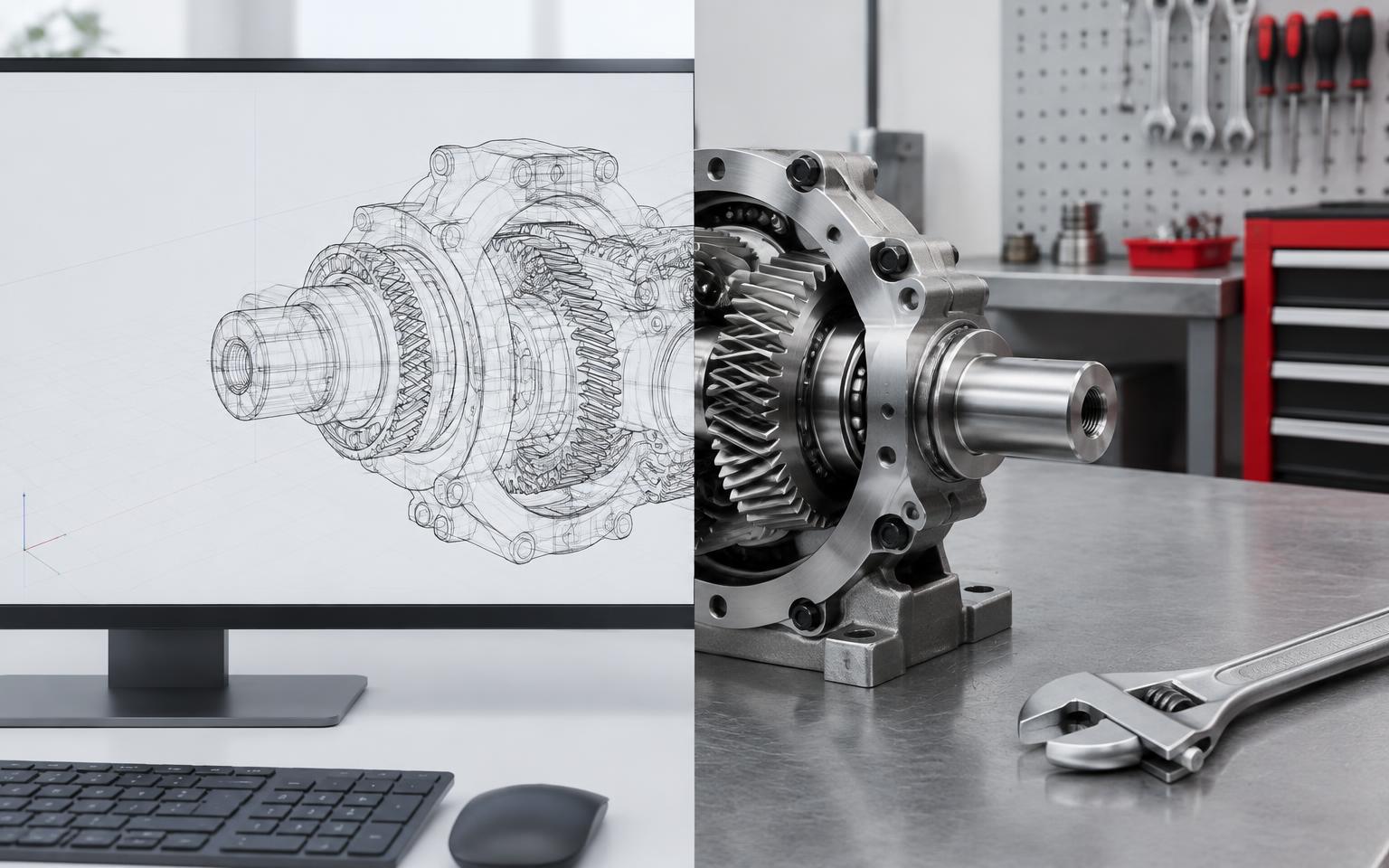
What it hides: a model that is correct on paper but never verified in reality, with tolerances that stack up, assembly interferences and components that are impossible to reach for maintenance.
What to do: check interferences and tolerance chains on critical assemblies in CAD, plan a trial assembly and feed the results back into the drawings. A useful read is our practical guide to dimensional tolerances for designers.
4. “The customer wanted it yesterday”
What it hides: compressed deadlines hit first what is not visible at a glance, namely documentation, testing and verification. The machine ships, the manual arrives later or arrives incomplete, and the customer finds out at the first maintenance intervention.
What to do: put documentation deliverables into the schedule as milestones, on a par with the mechanical work, and agree with the customer what “delivered” means: machine, manual, declaration of conformity, recommended spare parts. If time is short, reduce the scope explicitly, not silently.
5. “Can't we just 3D print it?”
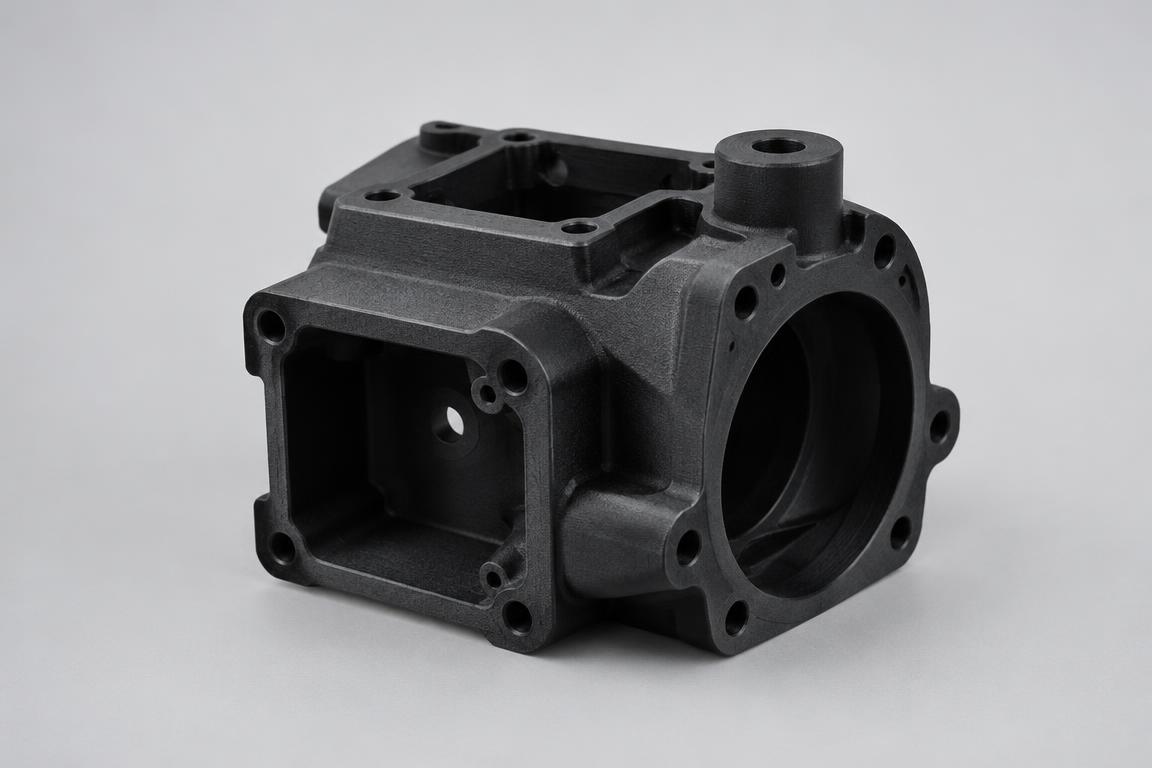
What it hides: 3D printing is a powerful tool, but not a universal shortcut. It works very well for jigs, supports, non-structural guards, format-change tooling and temporary spare parts; it is unsuitable where the component performs safety functions or is subject to unverified loads.
What to do: start from the production problem and the requirements (loads, temperatures, environment), choose the process and material accordingly and document the component like any other. To find your way around materials, read Industrial 3D printing: materials and applications.
6. “The manual? We'll think about it at the end”
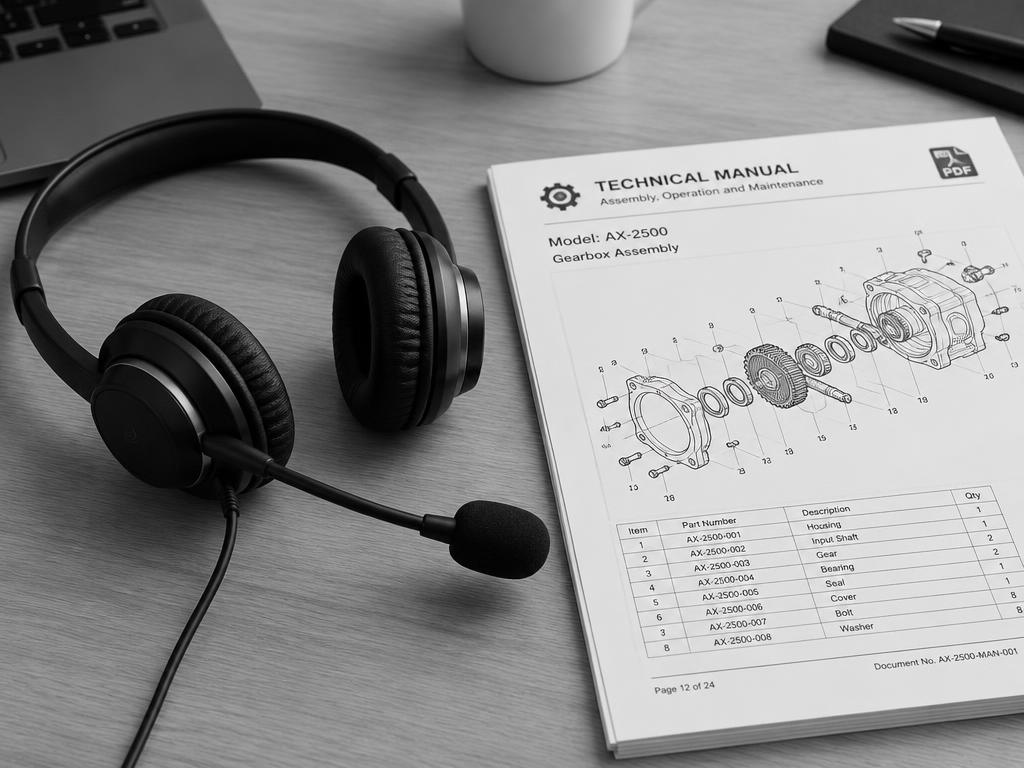
What it hides: a manual written at the end of a project is born in a hurry, by the people with the least time who have already forgotten the details, and design doubts surface when the machine has already shipped. The instructions for use, moreover, are an integral part of the machine's safety, not an attachment.
What to do: start the documentation together with the project, update it at every milestone and involve a technical writer from the very first reviews. Here you will find 5 common mistakes in format-change instructions and how to avoid them.
Checklist for project managers: from signals to actions
- Every change goes through a tracked request, even a “five-minute” one.
- Testing and format-change procedures are written down and tried by someone who does not know them.
- Drawings and the bill of materials are checked for interferences and tolerances before release.
- Documentation and the manual are schedule milestones, not leftover activities.
- For 3D-printed components, requirements, material and documentation are defined.
- The phrase “we'll think about it later” is answered with a date.
And you, what is your phrase?
These phrases are not mistakes in themselves: they are signals. Those who can recognise them have time to act. What is the phrase you hear most often in your work, the one that immediately tells you a problem is about to arise? Write to us or subscribe to the FUORI MANUALE newsletter: we will discuss it together. If the problem has already arisen, let's talk about it: CAD-Project supports automatic machine builders with technical documentation, mechanical design and 3D printing from its offices in Argelato and Imola.
Frequently asked questions
When should the manual of an automatic machine be updated?
Whenever a change affects operation, safety, use or maintenance procedures, or spare parts. That is why documentation must be tied to change management and not updated only at the end of a project.
What changes with the Machinery Regulation (EU) 2023/1230 for manufacturers?
The Regulation replaces Machinery Directive 2006/42/EC and applies from 20 January 2027. It confirms the role of the technical file, risk assessment and instructions for use, and introduces additional requirements, for example on machines with autonomous or evolving behaviour and on protection against tampering and cybersecurity. It is advisable to have your specific situation checked by a consultant.
Can a spare part for an automatic machine be 3D printed?
Yes, for many non-critical components such as supports, non-structural guards, jigs and temporary spare parts, provided requirements and material are defined and the part is documented. Without adequate verification, it is not suitable for components with safety functions.
Who should write the manual: the engineering department or an external technical writer?
The most effective model is collaboration: the engineering department guarantees the accuracy of the content, while the technical writer structures, simplifies and checks the clarity of the text, also with a view to translations.